Association for Information Systems
PO Box 92523
Atlanta, GA 30314-0523 USA

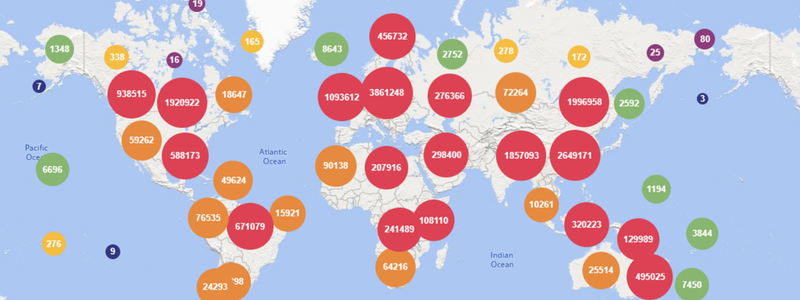
AIS eLibrary hosts one of the largest collections of IS scholarly scientific research on the planet. The collections include 11 IS journals, 7 affiliated journals, conference proceedings for ICIS, AMCIS, ECIS, PACIS and hundreds more from regional academic conferences, workshops and seminars. The eLibrary garners more than 6 million abstract views and 3 million downloads every year.
The demand for the ability to share work in the field of IS sparked a period of exciting research evolution starting in the late 1970s with new journals emerging to address diverse research approaches, regional needs, and specific IS subfields. This diversification not only enriched the IS research landscape but also fostered a more global and multifaceted conversation on the ever-growing impact of IS.
Central to the success of IS research is the AIS eLibrary, which stands as the central repository for research in the ever-evolving field of IS. While many important journals paved the way for IS research, the eLibrary’s history reflects the growth and transformation of IS research itself, mirroring the field’s journey from the era of new and misunderstood area of study to the diverse and growing field that it is today.
The Rise of IS Research
In the mid 1970s, the number of IS researchers continued to expand along with the fast-growing field. As IS researchers began producing more IS articles, they needed a different journal space to publish their scholarly work. There was no publication outlet that was IS-specific and researchers had to depend on journals that belonged to other disciplines to get IS articles published. As a result, some researchers were pressured to fit their work to suit the style and themes of the particular journals.
To overcome this challenge, MIS Quarterly, the oldest journal in the field of IS, was established in December of 1977 by IS pioneers Gary Dickson and Gordon Davis. Dickson went on to serve as the first editor in chief of the journal and stated in his first editorial note that MISQ “attempts to break new ground in the IS field” by providing a vehicle of communication for IS communities.”
“We recognized early on that we needed our own [IS] journal,” said Davis in a 2015 interview. “We had a unique idea to start with two sections. One was for academic papers and the other was for business-oriented papers, so when MIS Quarterly was first formed, it had these two sections.”
Expanded Research Calls for Expanded Journals
In 1985, during ICIS, researchers felt the need for a new journal with a different focus beyond the current MIS Quarterly offering. A committee led by Bill King and Chris Bullen surveyed hundreds of IS faculty, finding strong support for this initiative. They proposed the creation of Information Systems Research (ISR) in 1990. ISR aimed to publish “theoretical and empirical works” across a broad spectrum, including research with organizational applications, conceptual development, and both qualitative and quantitative methodologies. It quickly became a top IS journal.
European researchers felt their work, often broader and less focused on positivism than the North American mainstream, needed dedicated outlets. Journals like the Journal of Information Technology (JIT) (1986), the European Journal of Information Systems (EJIS), and the Journal of Information Systems (JIS) (approximately 1990) emerged to address these needs. Information & Organization (formerly Accounting, Management and Information Technologies), The Journal of Strategic Information Systems, and Information Technology & People soon joined the mix. Additionally, regional journals like the Scandinavian Journal of Information Systems (SJIS) (1988) and the Australian Journal of Information Systems (AJIS) (1993) provide outlets and platforms initially aimed for researchers in certain geographies, but have grown to have global reach and global impact across multiple topics in the IS field.
Further enriching the IS research landscape were topic-specific journals catering to specific research areas. Decision Support Systems (1985) catered to the Decision Support Systems (DSS) community, while the Journal of Global Information Management (JGIM) (1993) focused on global IS management and cross-cultural research.
A Home For All IS Research
One of AIS’s key initiatives after its formation in 1994 was the development of the AIS eLibrary, launched in the late 1990s. The initial focus of the AIS eLibrary was on providing online access to the flagship journal of the AIS, the Journal of the Association for Information Systems (JAIS). Founded in 1995, JAIS quickly gained recognition for publishing high-quality, peer-reviewed research on a broad spectrum of IS topics.
The eLibrary provided a readily accessible platform for researchers to access and share their work, fostering collaboration and knowledge exchange within the global IS community.
Following close behind, the Communications of the Association for Information Systems (CAIS) was created in 1999 as a conduit to facilitate
communication among AIS members. CAIS publishes novel, original and groundbreaking research, methodological essays and guidelines, important lively debates about research practices, and is also the only dedicated AIS outlet that publishes matters and studies related to IS pedagogy.
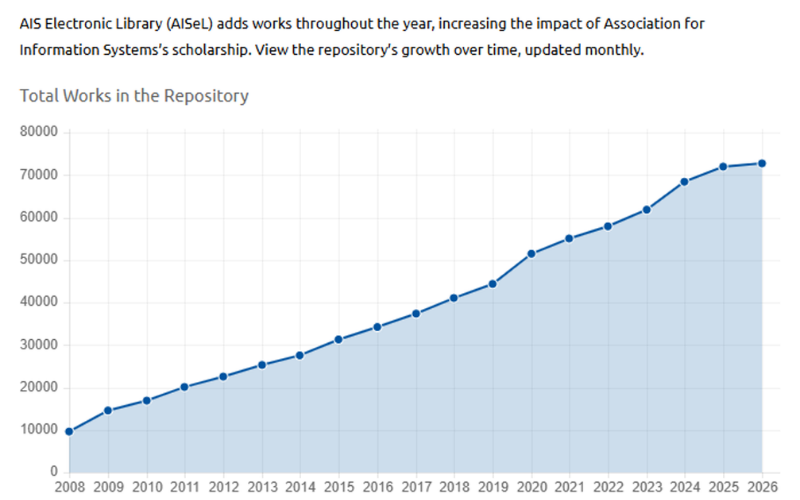
Beyond JAIS, the AIS eLibrary expanded its scope in the early 2000s. New journals were added, such as AIS Transactions on Human-Computer Interaction (AIS THCI), reflecting the growing emphasis on human-centered design in IS research. Transactions on Replication Research (AIS TRR) was launched in 2014 to publish reports of IS replication studies that have been published in other journals until scientific consensus is reached.
Additionally, the eLibrary incorporated conference proceedings from major AIS-sponsored conferences like ICIS, the Americas Conference on Information Systems (AMCIS), the European Conference on Information Systems (ECIS) and the Pacific Asia Conference on Information Systems (PACIS). This broadened the scope of available research, offering insights into the latest advancements and ongoing discussions within the field.
Continued Growth and Expansion
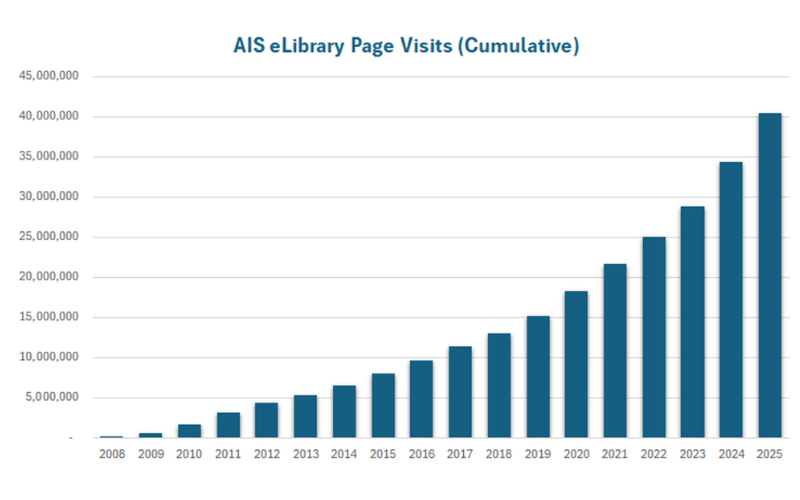
Today, the AIS eLibrary showcases one of the largest collections of IS scholarly research on the planet, hosting ten AIS journals, seven AIS affiliated journals, four of the largest regional IS academic conference proceedings (ICIS, AMCIS, ECIS and PACIS) and countless SIGs, communities, and affiliated conference proceedings. An astounding 3.6 million downloads from the AIS eLibrary were completed in the past 12 months, raising the total number of downloads during the eLibrary’s history to more than 34.5 million. This readership is spread across nearly every country on the planet and not only stems from education universities, but more than 25% of the eLibrary’s readership is from commercial, governmental, military and NGO entities.
In an effort to provide broad and global access to the research and findings, well over 50% of the holdings in the AIS eLibrary were designated as Gold Open Access in recent years. Furthermore, AIS adopted a Green Open Access Policy with the large majority of its journal articles. That is, authors can immediately self-archive their articles without an embargo period when publishing in journals including JAIS, CAIS, PAJAIS, THCI, TRR, and MISQE.
From the singular outlet of MIS Quarterly in the 1970s to a comprehensive collection encompassing numerous esteemed journals and conference
proceedings, the eLibrary reflects the field’s transformation into a multifaceted global discipline. As the field continues to evolve, the eLibrary stands as a testament to the ongoing commitment of the AIS to fostering a vibrant and collaborative research environment. Collectively, the eLibrary’s journey reflects the dynamism of the IS field itself and helps AIS move ever closer to its mission “serving society in the advancement of knowledge and excellence in the study and profession of information systems.”
Sources:
https://aisel.aisnet.org/history_interviews/19/
https://ishistory.aisnet.org/wp-content/uploads/2024/04/
Association_for_Information_Systems-History-2014.pdf
eLibrary
elibrary@aisnet.org
Can’t find what you are looking for? Send us an email at ais@aisnet.org, and we will make sure to answer your question expertly and promptly.